


LOVING CHEESE
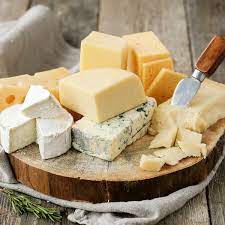
Loving Cheese…
Most people love cheese. Today, there is a new generation of cheese lovers. Thus far, varieties of cheese continue to grow. There are several different colours, textures, and types of cheese. Cheese manufacturers are crafting a special flavour-infused cheese too.
Cheese evolution
The cheese market has been through evolution over time. Most people relate cheese to being melty and cheesy as it’s on pizza and pasta. So, as we burrow deeper into cheese, it has a rich history. It explains why cheeses are different.
Cheese slices were the easier introduction to cheese for breakfast or lunch. It was perhaps by itself and melted on toast. Grated cheese found its way on sandwiches too. Then came block cheese cut into cubes for a cheese platter. Hence, common cheeses were mild Cheddar, tasty, and mozzarella. So, most of these cheeses were light yellow.
Orange Cheese
The ancient cheese process crafted lots of cheeses that had natural yellowing orange pigment. Such cheeses came from the milk of specific breeds of cows. There is mainly Jersey and Guernsey. So, milk from these cows was richer in colour. It was often a recognition of high quality and prestigious cheese.
So, the pigments come from the grass. Thus far, grass contains beta-carotene. It is a natural pigment that is found in pawpaw and carrots. Hence, the pigments transfer to the milk. Then it transfers to cheese giving it a rich and appealing colour.
Whiteish Cheese
Thus far, for many consumers, the distinct orange hue was a sign of premium quality. So, few things changed when cheesemakers realised, they could skim off the cream to sell separately or make butter. Hence, they make more money. In doing so, they lost most of the natural colours. Hence, you will notice natural orange colour in the fatty cream.
As a result, cheesemakers were left with low-fat cheese which was whiteish. So, to make it look like high-quality cheese they faked it. So, they made up for the shortfall by adding carrot juice, marigold, and saffron. Thus far, the 17th-century cheesemakers were using these colourings to make their products look like full-fat cheese. It was mostly because consumers were expecting yellowish-orange colour cheese.
Hence, the cheese colouring tradition transferred to the USA and then the rest of the world. The primary objective of this tradition was profitability, and marketing to make the cheese stand out as high-quality. Another good reason was that it provides cheesemakers to achieve a uniform colour.
Cheddar and American cheese
Cheddar cheese is made from cow’s milk. American cheese is made from a mixture of milk, whey protein, and emulsifiers. While Cheddar cheese has a mild and strong flavour, American cheese has a bland taste. However, American cheese has a smooth and creamy texture. It is easier to melt. Cheddar is mostly hard texture and crumbly. Thus far, people who prefer melty, gooey, and cheesy sandwiches like to use American-style cheese.
So, the blue vein cheese is not that colour of pigments. It is a natural blue mold.
Blue cheese
Blue cheese has a unique characteristic. It mostly has spotting grey veins, specks of blue mold, and may smell like ammonia. It is a sign of mature blue cheese. It is perfect for a cheese platter or enjoys with your favourite crackers. A great way to snack.
There are several ranges of blue cheese crafted with mold. Thus far, few people find it troublesome to eat cheese with mold. This is despite the fact, this mold in particular is absolutely safe for human consumption. In fact, it may be healthy. There is science and history behind this delicious moldy cheese.
Accident discovery
The legend for blue cheese discovery is interesting. Thus, the story claims in southern France, a shepherd was tending his flock of sheep. So, he retired to enjoy his rye bread and sheep’s milk cheese in a cave. However, before he starts to eat lunch, the sheep spooked and took off. He went after them. He left the lunch behind. He never came back.
So, months later, he passes by the cave and finds his lunch undisturbed. However, it had a thick layer of mold on top. Hence, he may have been either very hungry or simply adventurous, he took a bite. He did not get sick after eating months-old moldy bread and cheese.
Penicillium effect
Southern France is are known for its naturally occurring Penicillium. It is a type of mold that is part of the same group as one the antibiotics is made from. Hence, it is common in damp limestone caves.
Therefore, unlike other molds, Penicillium does not produce toxins on its own. So, they are perfectly safe for humans. Thus far, when Penicillin comes into contact with cheese, it creates a unique look, texture, and taste. It creates blue cheese that you love. Blue cheese is mostly available in most international supermarkets. You will love them with crackers or a pasta dish.
