


VANUATU’S AGRICULTURAL ECONOMIC PERFORMANCE
Vanuatu’s agricultural economic performance
Agriculture is the primary economy in Vanuatu. Thus, products like kava, copra, and cocoa contribute enormously to Vanuatu’s GDP. Vanuatu has about 2500kms of coastline. Hence, historically fishing has had significant importance to its economy. It is true today too. Thus far, fishing is important as sustenance to the population of Vanuatu. So, since Vanuatu gained its independence in 1980, the focus has been on the agriculture sector. It has become increasingly crucial for national development.
Therefore, it is critical to maintaining social well-being. It is the foundation of culture and livelihoods too. Hence, agriculture is the engine of economic growth. It is equally important for biodiversity and environmental integrity. So, it helps to reduce risk. Despite the importance and efforts of previous governments, the development of this vital sector has yet to influence its full potential.
Agriculture background
Agriculture dominates Vanuatu’s economy. Thus far, only a third of the total cultivatable land is farmed. Despite the agriculture sector has grown at an annual rate of 3.3 percent since 2003. In comparison, the economy has grown by 2.8 percent. The average population growth is 2.6 percent per annum. Thus far, the domestic market for agricultural produce is very small. About 75 percent of the population lives in rural regions. So, their dependence on agriculture for livelihood is huge. Thus far, productivity in the subsistence sector is very low.
So far, there is a great potential for export. Opportunities are for both, high-value commodities and traditional produce Most of these commodities are organically grown too. Hence, it adds more value. Thus far, the production of these commodities needs to increase. It is only then they can penetrate the premium niche markets. So, the challenge is to increase effective and sustainable production. Thus, it will improve market access.
Livelihood
The livelihood of Vanuatu’s populace entirely depends on agricultural activities. It is crucial, especially in rural communities. Thus far, over the years production of major commodities are declining significantly. This trend has been due to both internal and external factors. So, to improve on the declining trend, there is a need to increase production. Hence, there is a need to review the current legislation and technology. Thus far, the stakeholders need to create new development initiatives and approaches.
Multiple development challenges
Vanuatu, like any other Pacific Islands country, faces multiple development risks. These challenges are associated with changing cultural practices and population growth. Natural disasters and climate changes add to the challenges. Other issues are those of and are not limited to market access, lacking credibility, and geographical disparity. There is an issue with inconsistent technical expertise too. Thus far, Vanuatu’s agriculture sector stakeholders have been working on tackling these risks. They have been working in overdrive. However often it is in an ad hoc way. So, they tackle challenges as they come and as they find resources.
In fact, the sector’s development lacks a unified and coherent policy framework. A comprehensible approach may be helpful. Thus all stakeholders may implement strategic actions. It may be a meaningful investment. Hence, it needs to be action over an appropriate planning timeframe. The Ministry of Agriculture, Livestock, Forestry, Fisheries, and Biosecurity has developed a macro-level policy. It is known as Overarching Productive Sector Policy. It aims to improve efficiency and performance. Hence, it should result in significant growth.
Agriculture sector policy
Hence, this Agriculture Sector Policy widens upon the direction and guidance. It may help outcomes for all productive sectors. Thus far, it further elaborates micro-level policy directives and strategies relevant to agriculture. This policy development has been the cumulative effort and knowledge of stakeholders in the agriculture sector. In fact, its implementation has been input by the Government, the community, and various other sector agencies. For example, in 2007, the United Nations Food and Agriculture Organisation supported the Vanuatu Government. Its help was to undertake initial agricultural policy discussions to raise stakeholders’ resolve to commence the development.
Thus far, many other recent Vanuatu policies put significant confidence in the agriculture sector. It all contributes to rural development and provides substantial guidance which is contained in the Agriculture Sector Policy. Trade Policy Framework, Industry Policy, Forest Policy, Land Use Planning, Agriculture Climate & Disaster Risk, and Land Sector Framework contribute to the policy.
Agriculture commodities
Most of the coconut palms were planted during the colonial era. Hence, a significant population of trees is ageing. Other factors such as land disputes prevent access to coconut plantations for exploitation. Thus far, coconut comprises most of the land devoted to crops in Vanuatu. Almost hectares of its landmass have coconut plantations. For example, theoretically, it should produce 760 million coconuts. However, actually, it produces about 300 million coconuts as a result of ageing trees.
Thus far, copra is the key cash crop. It comprises more than 35% of Vanuatu’s exports. So, in 2007, copra and oil from approximately 75 million coconuts were exported overseas. Coconuts are important for local consumption too. For instance, leaves are used for housing, fruits for drinking, and coconut flesh for feeding animals.
Copra dominates
Copra dominates Vanuatu exports in tonnage. So far, annually exports are in excess of 10,000 tonnes. In addition to this, more than 2,000 tones of bulk coconut oil are being exported. Thus far, technological advances, it permits new usage of coconut-derived products. So, now it means that coconut oil is used increasingly to replace diesel fuel. It may improve energy efficiency and sustainability can be accomplished by expanding the supply capacity of copra production. So, it may be an essential input for the generation of coconut oil.
Cocoa industry
Cocoa plants are on about 2,500 hectares of its landmass. It comprises a significant portion of the crop area in Vanuatu. Vanuatu’s cocoa is of high quality and organic. However, it has been difficult for farmers to compete because they have small plots. Thus far, with the demand for traceable, ethical, and organic cocoa, there is an opportunity for Vanuatu’s cocoa farmers. So far, only 10 percent of the world’s cocoa are being certified as such. A certification process has been implemented in the form of a database system. It is to keep track of such certification locally. Hence, to be in a position to take advantage of this demand. So, this scheme may allow cocoa growers in Vanuatu to take advantage of this niche market in the longer term. Thus, reap the economic benefits.
Vanuatu kava
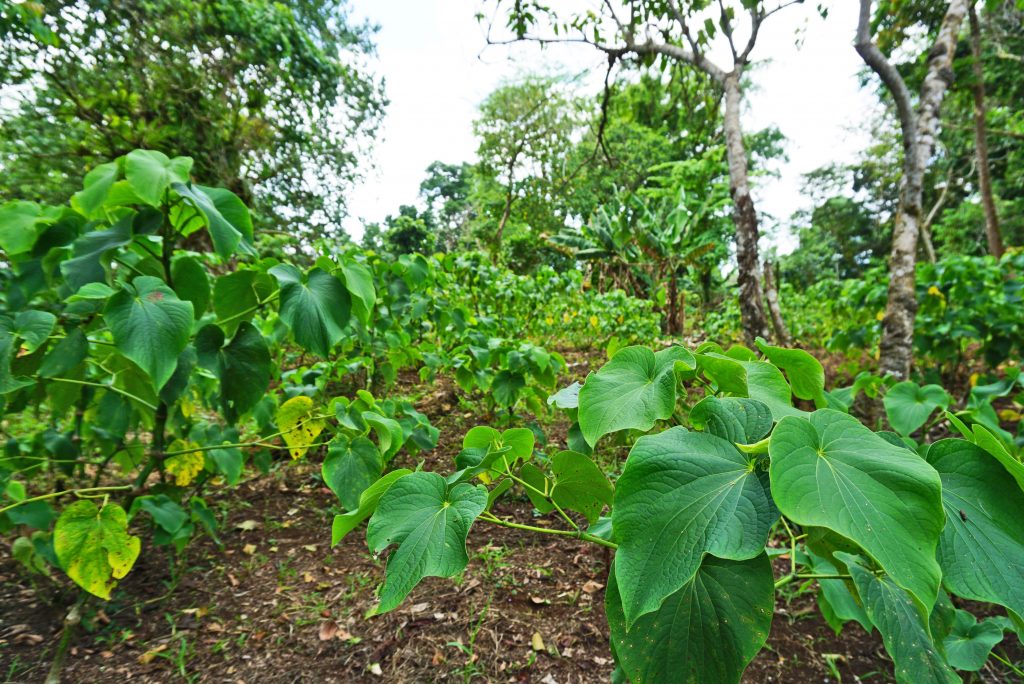
Kava is another important commodity for Vanuatu. It forms an integral part of culture, economic and social life. In fact, kava is Vanuatu’s third largest export commodity. Thus, it is an important export earning crop for the country. Australia and New Zealand funded, Pacific Horticultural and Agricultural Market Access (PHAMA) program help the kava industry to differentiate noble kava varieties. With PHAMA’s assistance, the Vanuatu kava industry implements the National Quality Standard for the Export of Kava. Thus far, this initiative in turn helps Vanuatu to maintain access to existing markets. It helps to protect its reputation as a kava exporter too. Hence, it ensures that exports only premium grade kava.
So, in partnership with Vanuatu Government, the PHAMA program helps training of kava industry participants. Furthermore, in collaboration with Vanuatu’s Department of Agriculture and Rural Development, PHAMA supports a nursery program too. Thus, it ensures farmers have access to resilient noble variety kava seedlings.
Other agricultural crops
New agriculture schemes introduce the cultivation of niche products. They produce such as Tahitian lime, and exotic nuts to take advantage of premium markets overseas. Furthermore, it encourages the cultivation of rice to alleviate dependencies on imports.
