


IMPORTANCE OF BUSINESS ETHICS
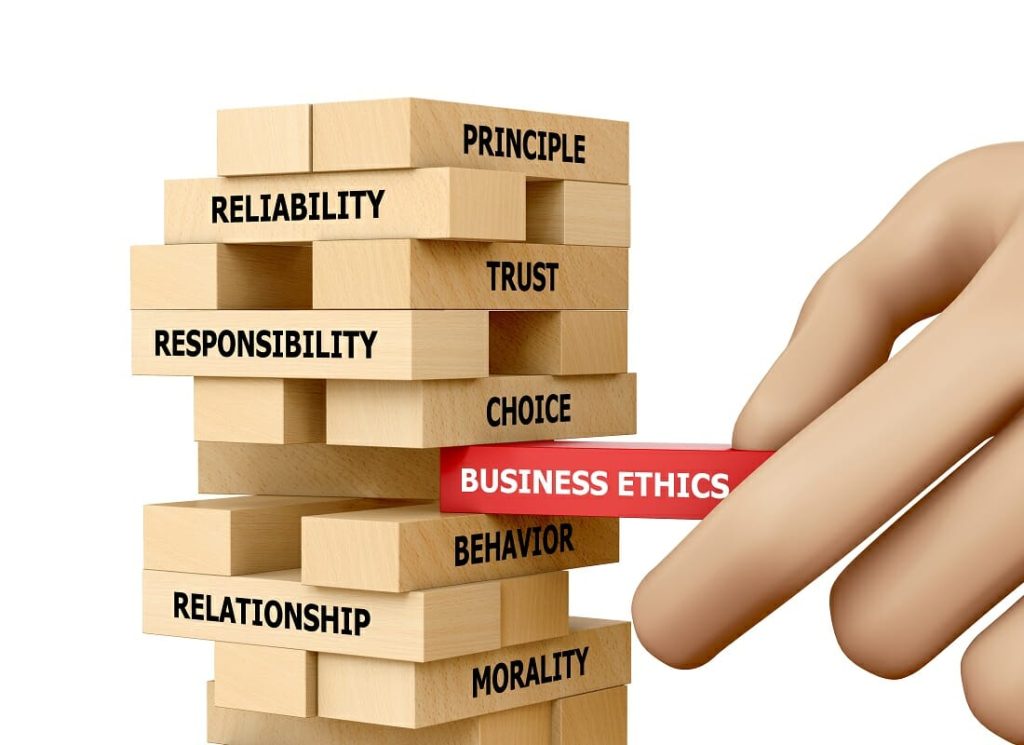
Importance of business ethics…
Business ethics by definition refers to the standards in business. Specifically, it means what is morally right and wrong. While law partially defines the conduct, legal and ethical may not necessarily be the same. So, like finance and marketing, ethics is an integral business function. It is important for companies and business professionals. However, there is little focus on it. Thus far, business ethics enhances law. It outlines acceptable behaviours beyond government regulations.
Many corporations establish their own code of ethics. They help to promote company integrity. Thus far, it helps their employees and gains trust among the stakeholders. It extends to investors and consumers. Nowadays, corporate codes of ethics are common. However, the quality often varies. In fact, the global ethics survey shows less than one in four workers acknowledge their company has a good ethics program.
Driving employee behaviour
When a company clearly defines its business ethics, it gives employees more reason to apply them. According to the survey, 90 percent of employees who experience a strong ethics culture are prepared to handle those issues. So, companies that encourage business ethics motivate their employees. Hence, they perform their roles with integrity. The cornerstone to building ethical culture is to create such a program. So, a complete ethics program must touch on all of the business functions. In fact, it must include areas such as operations, human resources, and marketing. It is important to integrate ethics programs with business operations. When this is done, it helps to maximise the program’s impact. Thus, it makes ethical processes part of employees’ workflow.
So, corporations have a crucial role in developing good ethics in the business. Similarly, educational institutions play a key role in developing ethical leaders.
Developing business ethics
An effective ethics program must define the program mandate. It must mitigate and monitor risk. Thus far, the business must establish a set of policies and procedures. It must be well-publicised among the stakeholders. The management must oversee the program too. Particularly with a focus on allegations of misconduct. It must provide training and two-way communication for proper implementation. The program must reinforce behavioural expectations. Therefore, the company must manage the functions of behaviour ethics too.
Today, ethics education is part of most management programs. So far, business professionals currently face some of the world’s most significant challenges. Thus far, there are many complex dilemmas. They include climate change, safety, and security. So, they require critical thinking and ethical reasoning. These are important skills to acquire.
Benefits
Business ethics helps to improve profits. It is another good reason to implement a business ethics program. Thus far, it benefits the bottom line. Surveys show most ethical enterprises outperform others with a well-implemented ethics program. Thus, it reduces losses. For example, according to global research, occupational fraud and abuse cost the victims USD$1 million and more. Thus far, companies that practice mediocre ethics experience severed business partnerships. It affects their profitability and business value. Furthermore, business ethics links to customer loyalty too.
According to the studies, more than half of consumers no longer buy from companies they perceive as unethical. In fact, 30 percent of consumers express support for ethical businesses on social media. Therefore, business ethics cultivates trust. Hence, it strengthens branding and sales. It is more important than ever for companies to carry out work the right way. So, ethics programs are exceptional tools to promote moral conduct.
