


TURKEY TAIL NOVELTY
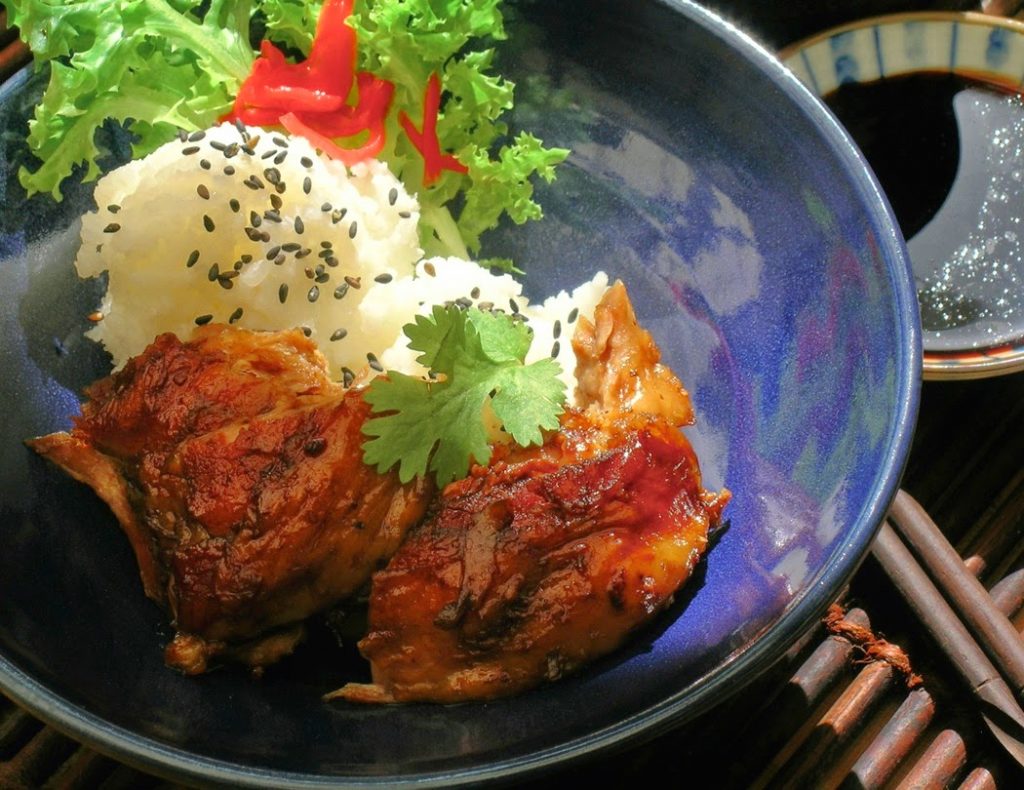
Turkey tail novelty…
Turkey meat is expensive in Australia. Particularly the whole birds. They are native to North America. Hence, the USA is the largest producer of turkeys. So, turkeys are more economical in North America. Thus far, on Thanksgiving, turkeys are on about 90 percent of the USA dinner table. It competes favourably with broiler meat. Generally, there are two species of wild turkey. These are the North American Wild Turkey or Meleagris gallopavo, and Central American Ocellated Turkey or M.ocellate. So far, more than 60 percent of global turkey production happens in North America. Turkeys were domesticated more than 500 years ago. However, it was only in the 20th century turkeys became known for their meat. Prior to this, turkeys were mostly for exhibition in poultry shows and their plumage.
Taken to Europe
The Spanish took turkeys to Europe. They had found them as a favourite domesticated bird among the Aztecs. They used it as a source of protein. The Aztecs consumed the eggs as well as the meat. So, they used the feathers for decoration. Turkeys rapidly became trendy on the dinner table for the wealthy. So, the birds were raised throughout Europe. Today, turkey remains a popular choice for meat. European Union produces more than 1.8 million tonnes per annum.
It is believed the first turkeys were taken to England by 1526. It was taken by a Yorkshireman, William Strickland. Apparently, he managed to obtain a few turkeys from American Indian traders on his travels. So, he sold them tuppence each in Bristol.
Nowadays, comprehensive livestock farming is a significant global industry. It serves up many million tonnes of beef, pork, and poultry annually.
Beaks and butts
Beaks and butts appear shorthand for animal parts that consumers prefer not to eat. Particularly in wealthy countries. Thus far, a particular part of the bird often never makes a platter or even the offal bag. It is the tail. The fate of this fatty gland shows us the extraordinary workings of our global food system. So, where to eat more of one food produces less desirable cuts. Hence, it then creates a demand elsewhere. In fact, in most instances so successful that these parts become a national delicacy over time.
After the Second World War, there was an evolution in livestock production. It was industrial-scale production with the help of scientific advances. These included growth hormones, antibiotics, and especially for turkeys artificial insemination. It was a revolutionary commercial turkey production. The total projection for 2017 was 245 million turkeys.
Turkey tails
So, that is a lot of turkey tails. They are also known as the parson’s nose, pope’s nose, or sultan’s nose. The tail is the fatty part that attaches the turkey’s feathers to its body. So, tails are full of oil that the bird uses to preen itself. Almost 75 percent of its calories come from the fat component.
Most of the turkeys sold in the USA stores are tailless. It is unclear as to why. However, industry experts suggest it may have been an economic decision. Before the Second World War Turkey consumption was a novelty for many consumers. So, perhaps, not many acquired a taste for the tail. However, you will find recipes online. Today, turkeys have become larger too. It averages about 14 kilograms. Whereas it was less than half in the 1930s. The demand is now more for breast size.
Taste in Samoa
To avoid letting turkey tails go to waste, the poultry industry explored a business opportunity. Since animal protein was scarce in the Pacific Island communities it was their target. So, in the 1950s the US poultry producers the Pacific Island nations as dumping grounds. They exported turkey tails and chicken back into markets in Samoa. Thus far, they ensured not to be outdone by Australia and New Zealand in exporting mutton flaps. Pacific Island communities refer to mutton flaps as sheep bellies too.
So by 2007, turkey tail consumption had risen to more than 20 kilograms per average Samoan every year. It was a food that was hardly known less than 100 years ago. In fact, it nearly triple Americans’ annual per capita turkey consumption. Hence, some consider this once-unknown foreign food is now a part of the Samoan cuisine.
Favourite dish
Nowadays, turkey tails are a popular Samoan dish. Perhaps washed down with a favourite beer. This would be the most popular answer when asking multiple people. It has without a doubt become a favourite among Samoa’s working class. Any Samoan will explain, they eat turkey tails at home with the family. Hence, it is a social food. It is not eaten alone.
Over time, turkey tails have been in discussions of health challenges. For example, American Samoa experiences an obesity rate of 75 percent. Thus far, Samoan health officials were so concerned that they banned turkey tail imports in 2007. However, to ask Samoans to abandon their cherished food overlooked its deep social attachments. So, authorities were forced to lift its ban in 2013.
