


COCOA BEAN SUPPLY CHAIN
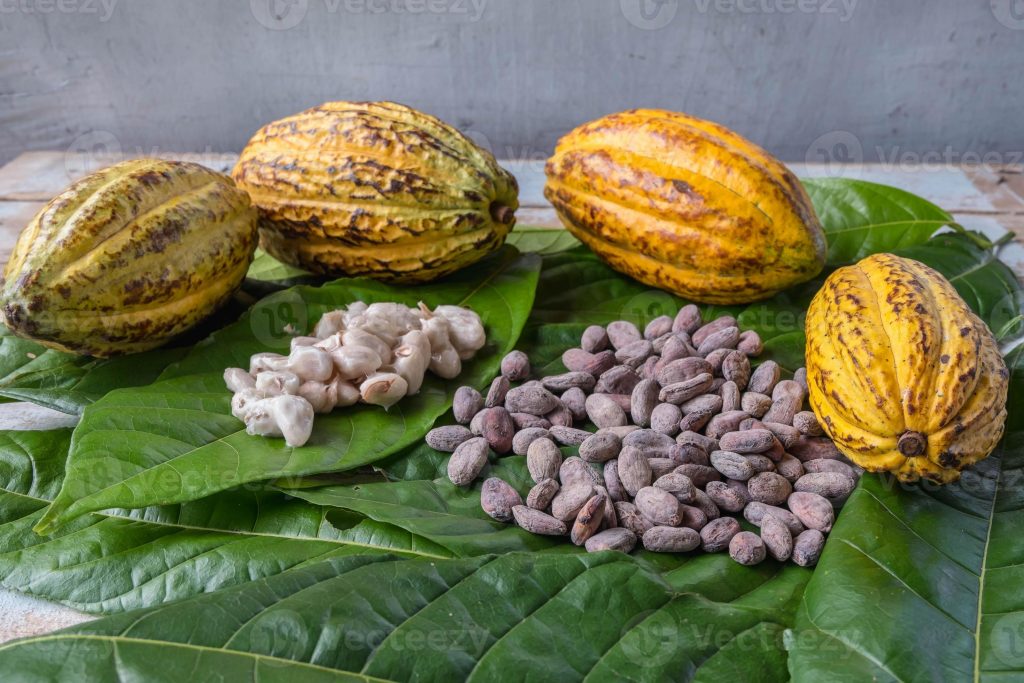
Cocoa bean supply chain…
Cocoa beans are used in many foods and beverages. For many centuries people have been using it for a range of applications. Cocoa beans have always been in high demand throughout history. The beans exhibit numerous health benefits and other properties. The large-scale use in the food and beverage, confectionery and cosmetics creates high demand.
Cocoa beans are a well-known commodity. It is a profitable cash crop. The market demand is strong. Furthermore, there is a rising demand to produce chocolate variants. Thus far, there is increasing demand for dark chocolate, milk chocolate and brownies throughout the world.
Cote d’Ivoire is the world’s largest cocoa producer. It produces almost 2.2 million tonnes of cocoa beans annually. It is followed by Ghana, Indonesia and Nigeria. Cocoa bean production and exports are the major earner for these countries. Their economy heavily depends on world cocoa prices.
Chocolate producers
The major chocolate producers and exporters are in Europe. So, European cocoa market is diverse. To meet the needs of cocoa and chocolate industries is complex too. Therefore, chocolate producers source cocoa beans of different quality and origins. Chocolate consumption in Europe on average is 5 kilograms per person. Thus far, chocolate coating is becoming increasingly popular. Food manufacturers while processing vegetables, fruits and cereals are coating with chocolate to enhance flavour. This trend is expected to drive the demand further.
The top four chocolate-producing countries in the world are Belgium, Germany, Italy and Poland. These countries account for more than 40 percent of chocolate exports worldwide. The top four countries producing world’s best chocolate are Belgium, Ecuador, Switzerland and the United Kingdom.
Rising demand
Sales of chocolate in its various forms is soaring. Hence, it increases the demand for cocoa-processed products. For example, there is a significant increase in producing cocoa butter, and cocoa liquor. The launching of premium chocolates and uses as a flavour and beverages is expected to bode well for the global cocoa market.
Chocolate manufacturing currently represents the largest end-user of cocoa. So, the enormous chocolate consumption and production explains the increasing appetite for cocoa. Cocoa uses are increasing in a range of industries. It includes confectionery, baking, flavouring and colouring agent. Hence, making cocoa the most widely consumed flavour in the food and beverage industry.
Growing cocoa trees
Cocoa plantations are normally smallholder farms. On average the farms are from 2 to 4 hectares. Generally these farms are in hot and humid region. Smallholder farmers cultivate cocoa plants in regions such as West Africa, Latin America, and South East Asia. The three main varieties of cocoa trees grown are Criollo, Trinitario, and Forastero.
Cocoa trees grow better under the protective shadow of plants such as banana, plantains, and palm trees. They are hardy to a wide variety of soil types. However, vulnerable to a lack of water. Rainfall is the key factor that may affect the yield of cocoa trees. Therefore, rainfall should be plentiful. It needs to good distribution throughout the year with levels between 1,500mm and 2,000mm of rainfall. So the dry spells when rainfall is less than 100m per month, it should not exceed three months.
Farm maintenance
It is imperative to use good agricultural practices to maintain the farm. So, the farmers need to be proactive with weeding, pruning and fertiliser application. Furthermore, pest and disease control are imperative for the thriving treas. When maintained well, cocoa trees can be productive for about 25 to 30 years. However, trees can live up to 100 years.
Harvesting and pod breaking
Cocoa pods grow from the tree branches and trunk. Cocoa pods are suitable for harvest for 3 to 4 weeks. After this period the beans start to germinate. As such, harvesting needs to happen at regular intervals. All cocoa pods do not ripen at the same time. Harvesting is to remove ripe pods from the trees and open to extract beans. Ripe pods are harvested manually. It is done by making a clean cut through the stalk with a well sharpened blade.
So, the farmers open and remove the beans within a week to 10 days of harvesting. Generally, the harvest is grouped and split either in or at the edge of the farm. It is all done in the planting area. Thus, husks can be used in the fields to return nutrients to the soil. Wooden club is used to split the pod into two halves.
Fermentation and drying
Farmers normally ferment and dry cocoa beans on the farm or in their village. Cocoa beans covered with pulp generally stored in boxes or baskets. It may be heaped into piles too. To cover with mats or banana leaves or plantain leaves helps to heat the pulp in the sun and ferments the beans. This process normally takes three to seven days. It is an important process as it enhances the flavour of cocoa beans. Poor fermentation affects the flavour. Over fermentation gives it an acidic taste.
After fermentation, beans are sun-dried for about five to seven days. Beans are spread out on mats, trays, or concrete floors. Drying process stops fermentation. Hence, it enhances storability of the cocoa beans. Throughout the drying process farmers rake or turn the beans to ensure uniform drying and aeration. Thus far, the drying rate is important for final quality of the cocoa beans.
