


TUNA IS AN INTEGRAL PART OF THE PACIFIC
Tuna is an integral part of the Pacific…
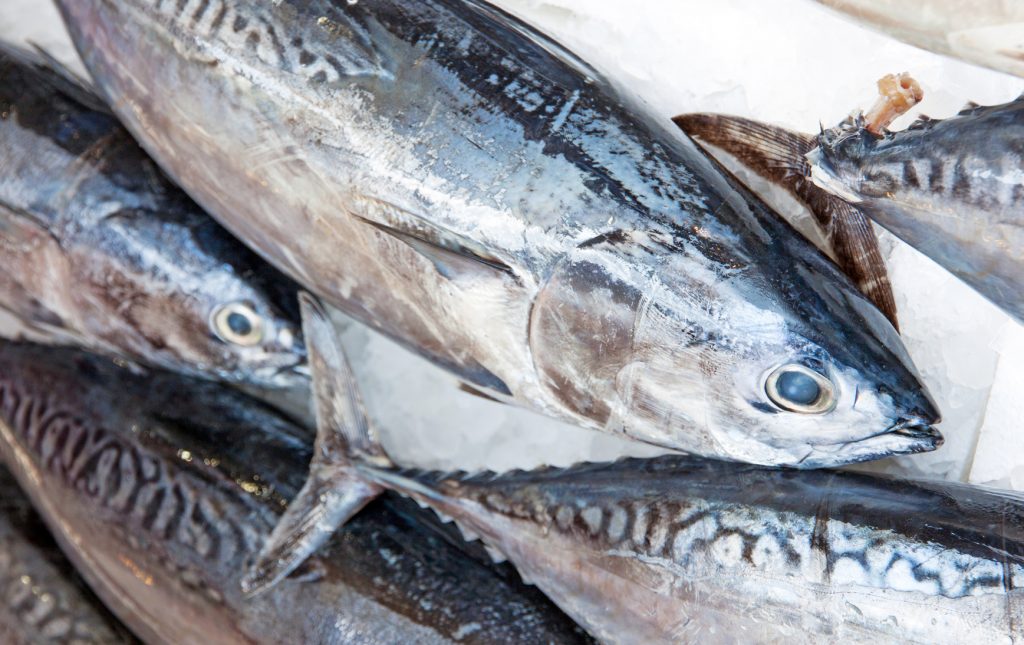
Tuna has always been an integral part of the food source for many Pacific Islanders. Nowadays, tuna are very important to their economies. The tuna industry is now a major revenue and gross domestic product to the Pacific countries. Thus far, tuna exports for the Pacific are worth many more billions in the world markets. Tuna is found within their exclusive economic zone, for some Pacific islands the only significant renewable resource. It is possibly their best opportunity for economic development. The western and Central Pacific Ocean is full of numerous species of tuna. The four important types for commercial fishing are albacore, bigeye, skipjack, and yellowfin tuna. Therefore, tuna is vital for their economies. For instance, the annual tuna catch in the Pacific Islands is substantial. It is estimated to have a current value of about 11 percent of the combined GDP. This includes all the countries in the region.
Schooling fish
Tuna are schooling fish. Skipjack tuna schools may be in thousands. Tuna are migratory fish and they roam great distances across the open ocean. Their torpedo shape makes them very fast. Tuna often follows food. Furthermore, they react to changes in water temperature as well as other factors such as currents. Young tuna all normally look alike. However, adult tuna look different. Yellowfin tuna swim between the surface and subsurface layers of the water. Bigeye tuna normally grows slowly and descends to the deeper layers of water. Albacore tuna swims between the surface and subsurface layers of the water. However, much deeper than yellowfin tuna. All four important types of tuna are predators at the top of the food chain. They help to maintain the balance of life in the oceans.
World Market
Tuna represents a multibillion-dollar per annum industry to the world. Whereas the Pacific Islands countries contribute a third of the world’s requirement each year. Therefore tuna industry provides essential direct and indirect employment. It equates to 5 percent to 8 percent of the national employment. Furthermore, supports subsistence, and is a valuable source of income for governments. These are in the form of access fees, duties, and other benefits. Another benefit is through commercial sport fishing. Therefore, the tuna industry is linked to the important tourism industry too.
The future food security and economic development of the Pacific region are important. It will link to responsible and sustainable management of its tuna resources.
Tuna provides much of the nutrition and well-being to the world. To the region, it represents welfare, culture, recreation, government revenue, and employment. Therefore, maintaining its living marine resources is crucial.
Appreciation
People are lacking appreciation for the tuna industry. It is the most important of the fisheries in the region. Thus far, tuna fisheries produce about ten times the amount of fish produced by all the other fisheries of the region combined. In fact, the value is over seven times of all the other Pacific Islands fisheries combined.
Access fees are a critical component of government revenue for many countries. So, these are even more important in the larger resource-rich countries. Therefore, access fee income for many Pacific Island countries may be over the total value of all exports of those countries.
Furthermore, there are other benefits from locally based tuna vessels. There are more than, approximately 300 industrial tuna fishing vessels in the region. It includes 26 purse seiners, 32 pole, and line vessels, and about 203 longliners. These vessels are approaching substantial local expenditure.
Other benefits
There are transshipment benefits. Like the locally based ships, transhipping vessels have substantial local expenditures. So, these associated benefits are expected to continue growing. Thus, local businesses are expanding to cater to vessels about the trade. More than 500 transhipments are known to have been executed by Korean and Taiwanese seiners. This is a huge local expenditure for the economy.
Tuna forms a substantial component of small-scale tuna fisheries too. It may be the catch for the subsistence and artisanal fisheries in the Pacific Islands. Tuna us the most important family of fish for small-scale fisheries about volume.
