


AUSTRALIAN LAMB EXPORTS
Australian lamb exports…
Australian lamb exports are on the rise because of its quality. Consumers in more than 100 countries the world over enjoy Australian lamb. Aussie lamb offers the ‘all-natural advantage’. It is available in a wide range of product lines and cuts. Lambs are pasture-raised and grass-fed. It is free of any artificial additives and hormone growth. Thus far, Aussie lamb is a pure product of its pure environment. Furthermore, Australian lambs are naturally grown on lush green pastures. Therefore, farmers raise the lambs on the world’s finest ingredients; clean air, fresh water, and green grass. Australia enjoys the reputation of being the world’s finest lamb grower. It is one of the largest exporters of lamb worldwide.
Australian lamb stock fluctuates. It depends on varying seasonal conditions, movements in wool prices, and relative profits of other businesses. Lamb numbers peaked in 1970 at 180 million heads. Nowadays, sheep numbers estimates are about 75 million heads.
Sheep meat names
Lamb and sheep terms describe the age of the sheep meat. So, the classification lamb means an animal that has no permanent incisor teeth. It is generally about 12 months old. The term prime lamb in Australia normally refers to lambs that are raised specifically for meat. Generally, a seasonal peak in supply is referred to as spring lamb. It follows the traditional breeding cycle. These are lambs born in the previous winter. Thus, the selling occurs in the following spring when approximately 12 months old. Mutton is generally over 12 months old and is considered to be an adult sheep. It has at least one permanent incisor tooth.
Australian sheep is grown in a wide range of climates. It ranges from excessively dry and semi-arid parts of inland regions to the high rainfall areas of New South Wales, Victoria, South Australia, and Tasmania. The southwest Western Australia is a lamb-producing region too.
Carcass assessment
The fat cover on a carcass is known as be fat class. It rates on a scale of 1 to 5. Thus far, the depth of tissue at GR SITE determines the class. This site is located over the 12th rib. It is about 110mm from the midline. Australian meat processors objectively measure lamb carcass quality. It uses an industry program known as ‘chiller assessment’. It is the principal method to ‘grade’ lamb carcasses. Thus far, it allows the processor to accurately communicate the characteristics of the carcass to the buyers. It enables the buyer to be precise in specifying the type of product they desire. Lamb carcass assessment is conducted as they enter the chiller from the processing area. It is unlike beef carcasses which is done after chilling. So, fat cover and carcass weight are key to evaluating the carcasses.
Lamb’s shoulder
Lamb’s shoulder derives from the forequarter. It is the most economical cut. Shoulder cuts are most suitable for slow and moist cooking to tenderise it. Thus far, chops are often cut from the shoulder. Consumers prefer to cook delicious stew and casseroles from lamb shoulders. Ground and mince lamb is often created from the shoulder too. Butchers often create cubed or diced lamb strips from shoulders. Shoulder rack, bone-in shoulder arm chops, and bone-in shoulder blade chops are popular cuts too.
Lamb racks and loin
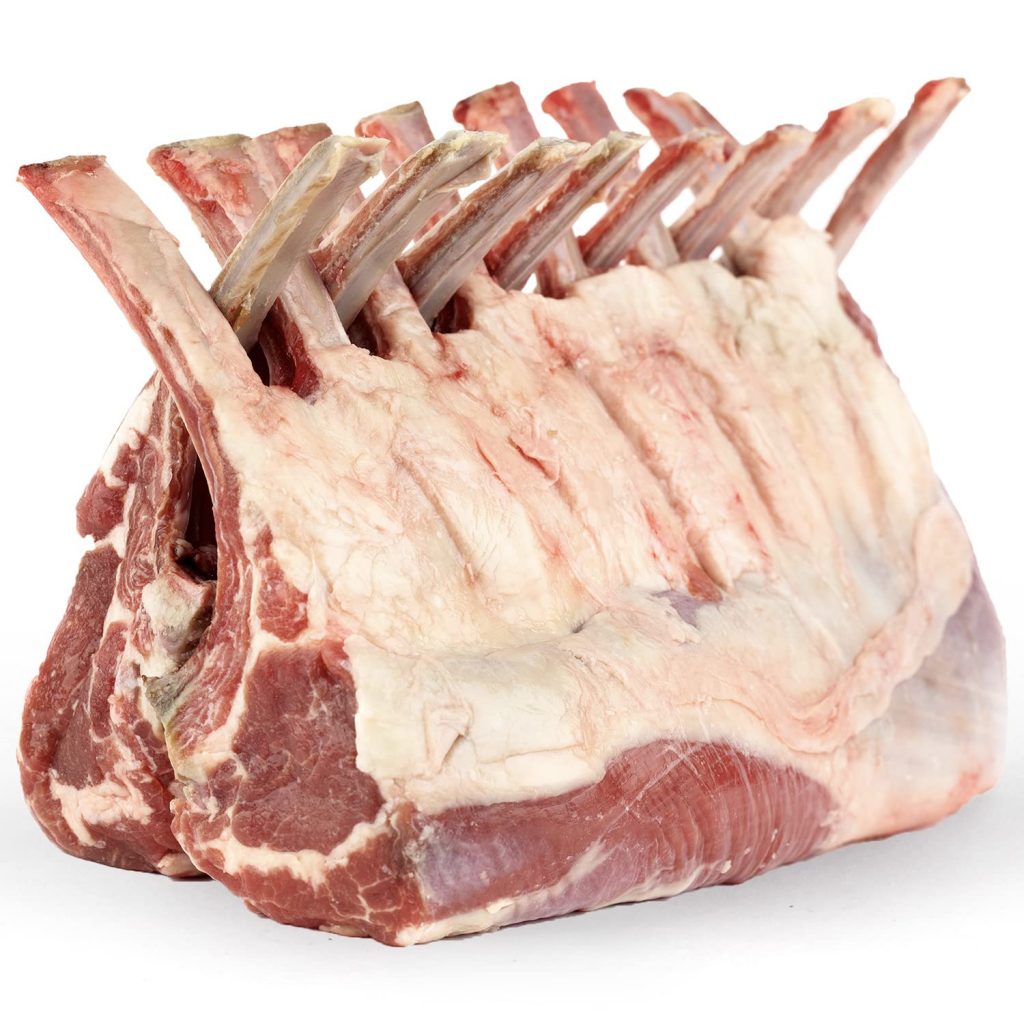
Lamb racks are a portion that comes from the front to the middle section. It starts at the lamb saddle and continues through to the full eye muscle. Therefore, it is a premium cut perfect for quick cooking to maximise its tender and juicy qualities. The Lamb rack is often frenched. It means fat and tissue between the bones is removed. It may be frenched and denuded with all fats removed. Lamb racks are popular as rack, chine and feather bones removed, and rib chops too.
Lamb loins is the middle lower section of the rear quarter. It is generally crafted into loin chops and tenderloin. Lamb loin may be boned, rolled, and tied. It can be cut into loin chops too. This cut is very tender and known as the jewel of the lamb. Other popular cuts are eye of short loin, short loin chop, and short loin saddle.
Sirloin and legs
Butchers craft sirloin centre cut chops, tenderloin, butt off, and top sirloin. Leg of lamb which comes from the hindquarter is the most versatile cut. A classic leg of lamb may be rolled and tied, butterflied, boned or cubed to make kebabs. It can also be cooked whole for roasting or creating premium quality chops. The lamb’s leg is tender and firm flesh. It is suitable for cooking a variety of recipes. Thus far, it is an economical cut that is brilliant for entertaining and great for leftovers. Lamb leg cuts may be denuded, bone-in leg chump off, and bone-in leg chump off. You may create cubed or diced lamb and lamb strips too.
Breast and shanks
Lamb’s breasts are also known as flaps. It is the remaining portions of a side after the preparation of major primal. There are many tasty, healthy, and easy-to-prepare recipes for lamb flaps.
Lamb shanks derive from the latter part of the fore and hind leg. Shanks are best to roast or braise. It helps to elicit the juices from the bone. Therefore, cooking shanks in liquid gives a better outcome. Slow-cooking shanks will separate meat from the bone. For this reason, shanks are almost always cooked in liquid. Most people prefer a long and slow cook. The flavour and its unique taste are worth it. You will love it.
Cooking Aussie lamb
A wide range of Aussie lamb cuts are suitable for different cooking recipes and methods. For example, lamb chops and T-bones are perfect on the grill. Whereas, legs and shanks are best for slow cooking. There are some important things to know when cooking Australian lamb. For instance, bring your meat up to room temperature before cooking. It helps to prevent meat from drying out. Grass-fed lamb requires less cooking time. As a rule of thumb, at least 30% less time. When you allow steaks, chops, and roasts to rest for 5-10 minutes before cutting, it keeps them nice and juicy.
