


THE FASCINATING PERSPECTIVE OF KAVA
The fascinating perspective of kava…
Kava has a very interesting history. It has thought-provoking effects. When you drink kava, it gives you a euphoric experience. The kava evolution over time is leading it to its popularity today. In fact, these developments have been interesting too. Kava has always been very popular and sacred throughout the Pacific. Nowadays it is becoming famous in the western world. Particularly in Europe and the USA. Once upon a time, there was a ban on kava in the west. Especially in Europe.
Kava is plant roots. So, after processing the roots kava drink is a mixture of water. Kava root has its own strength with the maturity level. It may vary in maturity from 3 years to 7 years or more. So far, you may adjust strength with water quantity too. Ironically, both, the plant and drink are known as kava. Today, the western world makes tablets and extracts from the roots. They mostly use these for treating anxiety and stress relief. Kava plants only grow in the Pacific. In fact, it came to the attention of the western world after Capitan Cook’s first visit to Tahiti in 1769.
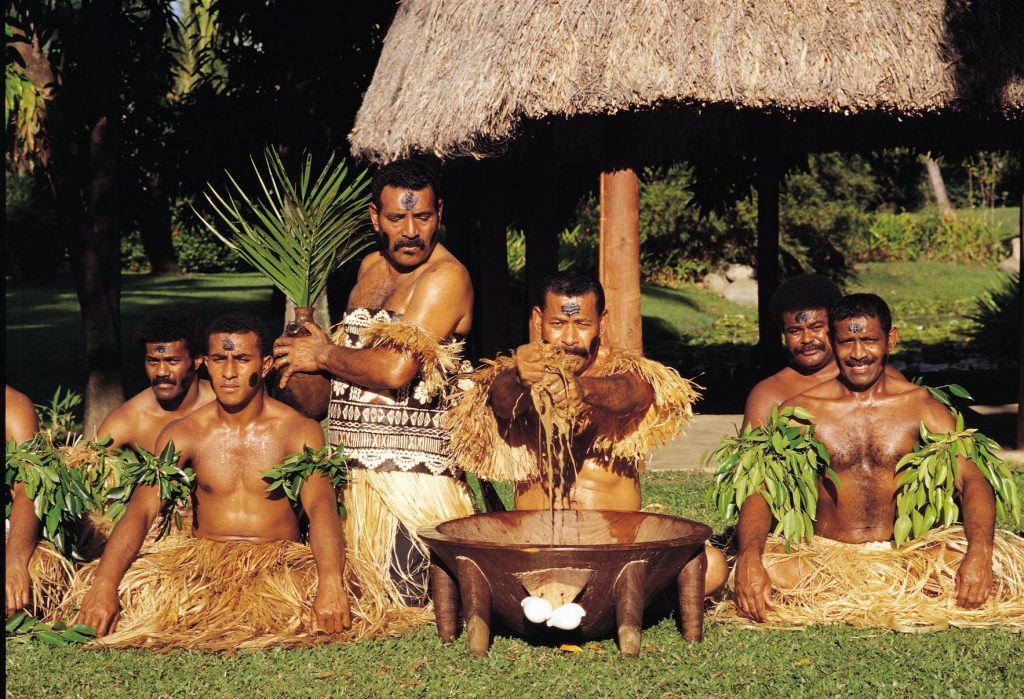
Ceremonial drink
When Capitan Cook and his scientists were invitees to a kava ceremony, they were fairly impressed. This was despite being put off by the taste. It was fascinating for them to experience the pleasing effects. So, the scientists named the plant piper inebrians. They later changed it to piper methysticum because of its distant relation with the pepper plant. To the early European explorers’ astonishment, they were finding kava drinking across much of Polynesia. People were drinking kava ritually from Tonga to Samoa and to the Cook Islands. In fact, kava drinking was happening in Fiji too. In Hawaii, they call it Awa. It is known as kava in Tonga. In Fiji, it is known as Yaqona. Its pronunciation is ‘yang-gona’. The belief these terms come from an early proto-Polynesian term. It means ‘bitter’. Thus far, the kava name has stuck to it. It is widespread worldwide. It is like the origin of the word ‘coffee’ or ‘tea’.
Historian perspective
For long historians, explorers and academics were of the belief kava was essentially a Polynesian beverage. It was little known about the real home of kava. The belief is that it was the volcanic archipelago of Vanuatu. Hence, Vanuatu holds many of the Pacific’s mysteries.
It was over two thousand years ago they were cloning drinkable varieties of kava. The ancestors of the surviving clans we cloning wild kava. It was these developments that creates the noble varieties that we drink today. So, the wild or non-drinkable parent plants went through many evolutions. The wild source was a type of pepper plant. It was known as piper wichmannii. This variety only grows in western Melanesia. The area comprises West Papua, Papua New Guinea, the Solomon Islands, and Vanuatu.
Extracts from these varieties of wild plants are undrinkable. However, with modifications, they are sometimes making traditional medicines. Through generations and numerous experiments, the wise men manage to develop from this plant another variety. These roots provide a drinkable extract with remarkable effects.
Non-alcoholic
These varieties are non-alcoholic. While it does not contain any alcoholic substances, it is an extremely complex line-up of 12 to 14 chemicals as known in 2002. Today, it is known to have over 40 chemicals. So far, 19 of these chemicals are psychoactive. They are mostly analgesics and anesthetics. Hence, it links in such a complex interrelationship. In fact, it is almost impossible to reproduce by modern methods. So, it is extremely complex to tell which are absolutely essential ingredients for the effect it gives when drinking.
Modern scientists are dubbing the psychoactive ingredients as ‘kavalactones’. Thus, this ingredient when drinking kava work on the central nervous system. It reduces the activity in the spinal area. Hence, reduces cardiac rhythm and may stimulate and relaxes respiration. So, the whole experience is extremely pleasurable relaxation. It clears the mind and sometimes increases focus.
Non-addictive
Kava is known to have mild narcotic effects. However, it is not addictive. So, the effects may last for a few hours. Consumers often wake the next morning feeling fresh.
Drinking kava may help cleanse the kidneys. It helps with its diuretic action. Hence, it may flush out minor illnesses. The traditional healers in ancient times were using kava for many remedies. It was a common treatment for constipation challenges.
Thus far, each species and subspecies of kava has its own specific effects and uses. There are over 80 varieties of kava in Vanuatu alone. So, some species are better for rituals and spiritual purposes, while others work better as ancient medicines.
