


WASABI
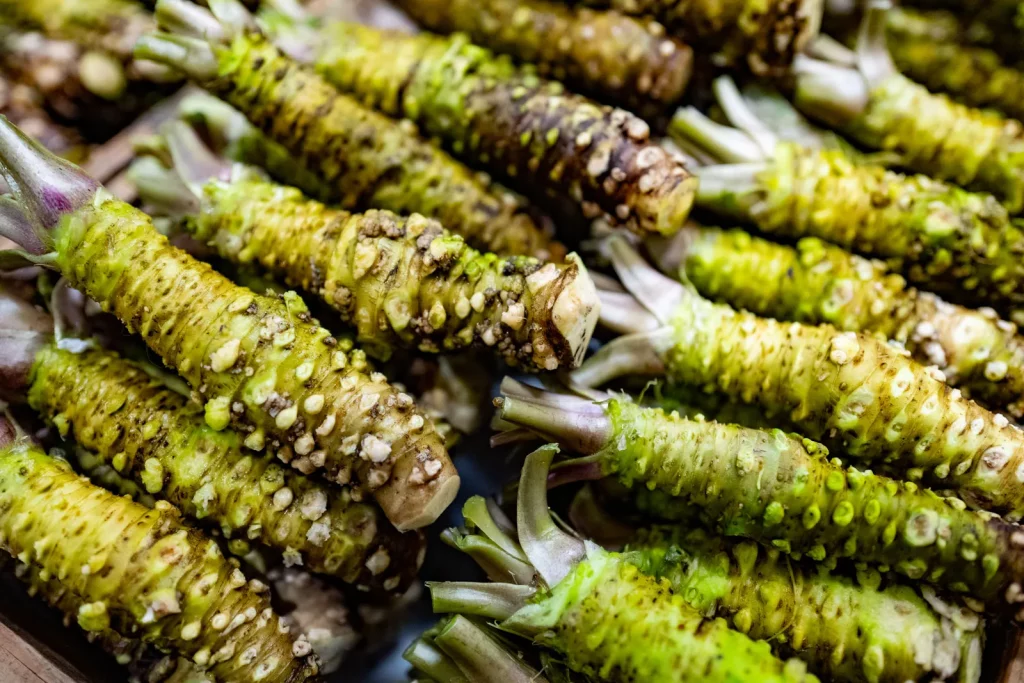
Wasabi…
While people relate wasabi to Japanese dishes, chances are many people have never tasted it. Thus far, wasabi is commonly known as the green paste to be served with sushi. It is spicy with an umami flavour. True wasabi extracts come from the rhizome of the Wasabia japonica plant. Rhizomes are like plant stems that grow underground. You normally expect to see a root there. Its signature clean spiciness comes from allyl isothiocyanate. In fact, it is not from pepper capsaicin. Maybe this is the reason most people describe a feeling of wasabi heat going ‘up their nose’ when they taste it. So, the scent receptors for wasabi are packed tight in our nasal passages.
Spicy green paste
This spicy green paste is commonly served with Japanese dishes. Primarily with sushi and sashimi. It is served with soba too. When you craft a luscious dipping sauce, it gives an extra kick to soba. You may enjoy wasabi with other foods too. The spiciness complements other dishes.
Wasabi is rich in vitamin C and has a number of antibacterial properties. So, many people consider it to be a superfood. It comes from the grating of mature rhizomes. Wasabia Japonica belongs to the same family as Horseradish. However, it is a different plant. Some people refer to wasabi as Japanese horseradish. In fact, it is technically incorrect. For example, horseradish is a completely different colour. Horseradish is white and wasabi is green. The ‘flesh’ of the plant is different too. Furthermore, we horseradish for roots and wasabi for rhizomes.
Valuable plant
In fact, with wasabi, we use all the plants; they harvest rhizomes, roots and leaves. Thus far, all parts are valuable for use. So the whole plant is processed in different forms. However, rhizomes contain the most concentration of flavour. In fact, rhizomes are the key component to producing the spicy paste. Thus far, this is what we most associate with wasabi.
Many consumers wonder what wasabi is made from. They often look for ingredient information. Thus far, the answer is so simple. There is only one ingredient. It is wasabi. So, to make wasabi, simply grate the rhizome. It instantly becomes wasabi paste. It is ready to consume. There is no other preparation or mixing. Thanks to our partners, you can find online to suit every preference and budget, from budget to top-of-the-range super stylish models.
Wasabi taste
Real wasabi, freshly grated tastes bright and green. It is with a touch of quickly fading heat. While it is pungent, it is delicate enough to bring out the full flavour in raw fish. The ‘hit’ of heat in the wasabi to serve with sushi is supposed to highlight fish flavour. It should not cover it. So, the chefs normally portion wasabi onto each piece of sushi in the best sushi restaurants. They usually serve nigiri style. It helps to balance the strong flavour of the fish.
Fake wasabi
Fake wasabi often burns much hotter and longer. It is often made from horseradish and sometimes mustard. Thus, too much of this imitation wasabi often totally obscures the delicate taste of the sushi. Most outlets that present condiments as wasabi are actually not the real deal. In fact, almost 90 percent of ‘wasabi’ in Japan is fake. In the international market, it is an even higher rate. This practice is very common. Thus far, experts estimate that about 95 percent of restaurants in Japan may be using fake wasabi. In fact, the estimate for countries like the United States is around 99 percent. So, there is a lot of fake wasabi.
The fake concoction is mostly horseradish. It is usually a mixture of mustard and green food colour. Thus, creating the white roots into a green paste. Perhaps this may be the reason why people often confuse wasabi with horseradish.
